

Discover the best Greece tours, from guided history tours and island-hopping trips to food tours. Find the Greek getaway that suits you best.
Greece has a way of getting under your skin. We have spent many summers island-hopping through Lefkada and walking the old streets of Mystras. We have watched sunsets melt over the Santorini caldera, and honestly, it never gets old.
Maybe you love 3,000-year-old ruins. Maybe you want fresh grilled octopus at a seaside taverna, or the bright turquoise water of the Cyclades. Either way, well-planned Greece tours can turn a good trip into one that truly changes you.
But here is the thing: not all Greece tours are equal. Some rush you through the Acropolis behind a guide with a megaphone, and that is it. Others give you room to breathe and meet locals. They let you actually feel the history under your feet.
In this guide, we list the best Greece tours of every kind. We cover guided history trips, island-hopping, food tours and multi-day trips that mix mainland gems with island escapes. Let’s find the one that fits you.
What Makes a Great Greece Tour Worth Booking
We have taken enough dull tours to know what turns a bus ride into a trip you remember for years. Great Greece tours come down to a few key things. For more ideas, explore Greece tours and Tours In Greece.
First, expert local guides matter more than most people think. A good Greek guide does not just read out dates. They bring the myths of Delphi to life and explain why dawn light hits the Meteora monasteries in a special way. They also point you to the taverna where locals really eat.
Second, the best Greece tours balance famous sights with real local life. Think of the Acropolis, Olympia and the Palace of Knossos. Then add olive oil tastings in the Peloponnese, cooking in Thessaloniki or a lazy afternoon in a Cycladic village.
Group size also plays a huge role. Smaller groups mean more access, better talks and less time waiting around. Finally, look for Greece tours that mix history, beaches and food without packing too much into one day.
The best Greece tours respect your time and your curiosity in equal measure. That is true whether you book with Intrepid, Trafalgar or a small local agency like My Greece Tours.
More Tours:
- How to Get to Olympia, Greece and What to See: Explore the Archaeological Site of Olympia
- Hydra
- Ikaria Travel Guide: Visit Ikaria Greece – Ikaria Island Adventure & Nature Guide
- Ios Greece Guide: Exploring One of The Best Cyclades Island
- Ithaca Ithaki
- Kalymnos
- Karpathos
- Kefalonia Tours and Excursions – Book Through the Locals for Unique Experiences
- Kimolos
- Kos Tours and Travel: Discover Kos Greece with the Best Tours
- Koufonisia
- Kythira Travel Guide: Discover Kythera’s Beautiful Island
- Kythnos
- Lefkada Slow Guide: Where to Stay in Lefkada Island, Greece – Best Areas and Hotel
- Lesbos
- Lipsi


Best Guided History Tours Through Ancient Greece
If you love ancient history, Greece is basically an open-air museum. The right history-focused Greece tours make it come alive.
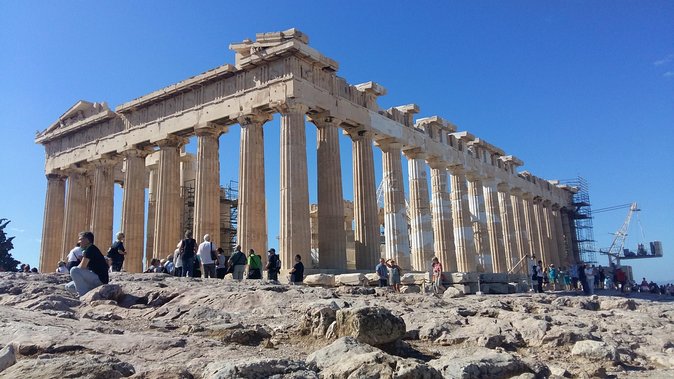
The must-see sites have not changed in thousands of years, but the way we see them has. The Acropolis and Parthenon in Athens are still the crown jewels. A skilled guide will also show you the quieter corners of the Agora and how Athenian democracy really worked.
From there, Delphi’s Sanctuary of Apollo is a true eye-opener. It sits high on the slopes of Mount Parnassus. The ancient Greeks thought it was the center of the world, and when you stand there, you sort of see why.
Meteora’s clifftop monasteries are on another level. We have visited dozens of times, and the mix of natural wonder and Byzantine faith still gives us chills.
Further south, Olympia is the birthplace of the Olympic Games. It and the mighty fortress of Mycenae complete any serious history trip. Some Greece tours also stop at Thermopylae, where the Spartans made their famous stand.
The 14-day Athens & Heart of Greece tour by Rick Steves is one of the strongest choices here. It links these sites with good background and a pace that never feels rushed. For a more personal trip, My Greece Tours builds custom history plans with native Greek guides who grew up with these stories.
Top Island-Hopping Tours Across the Greek Isles
Let’s be honest: island-hopping is what most people dream about when they think of Greece. With over 200 islands where people live, there is a huge amount of variety.
Santorini is the star, with villages on a volcanic rim and sunsets that truly live up to the Instagram hype. Mykonos brings the energy, with white lanes, beach clubs and stylish dining. But we think the real magic lies a little off the main path.
Crete is huge and full of surprises, from the Samaria Gorge to the Minoan palace at Knossos. Fun fact: that palace is more than a thousand years older than the Parthenon.
Syros, the administrative capital of the Cyclades, has lovely beaches and a real local feel that Santorini sometimes lacks. Paros charms visitors with quiet villages and great local food. Rhodes has its own Acropolis, plus a medieval Old Town that is a UNESCO World Heritage Site.
Firms like Intrepid, Globus and Kensington Tours all run well-reviewed island-hopping Greece tours. Each one covers a different mix of these islands. Want a route with quieter islands or family-friendly stops? My Greece Tours can build a custom island-hopping plan around your wishes and timeline.




Best Cultural and Culinary Tours for Food Lovers
Greek food deserves its own trip. We mean that literally: some of the best Greece tours in 2026 are built entirely around eating.
Think beyond gyros and moussaka, though yes, those are wonderful. Food tours take you into olive groves where families have pressed oil for generations. They lead you through the central market of Athens with a chef who explains five types of feta.
They also take you to seaside tavernas in Paros, where the fish was swimming that morning. In our opinion, Thessaloniki is the food capital of Greece. Its food scene is a lovely blend of Ottoman, Balkan and Mediterranean flavors.
Intrepid’s Greece tours often include great food moments. One example is a traditional lunch stop near Delphi with an olive oil tasting. But true food tours go deeper.
You learn to make spanakopita from someone’s grandmother. You also taste wines in Nemea and find regional dishes most tourists never see.
Some travelers believe you understand a place best through its kitchen. For them, food-focused Greece tours are not just a nice extra. They are the whole point.
Small-Group Tours With Expert Local Guides
A group of 8 is very different from a group of 40. Small-group Greece tours tend to cost a bit more, but the trip is far better. That matters in Greece, where so many great moments happen in small settings.
With a smaller group, your guide can actually talk with you. They can stop at an unplanned viewpoint on the road to Meteora or stay longer at a monastery.
They can even take you into a family-run souvlaki spot in Athens. A big bus tour would never fit through its door.
Odysseys Unlimited and Rick Steves both run excellent small-group Greece tours, usually capped at 24–28 travelers. Exodus Travels goes even further with active small-group trips. Think hiking in Crete paired with street food walks in Athens.
These Greece tours focus on leaders who bring real passion to every ruin, trail and meal. At My Greece Tours, we strongly believe in the small-group model too.
Our founder, Yannis Divramis, was born on Milos and grew up between Santorini and Athens. So when we say “local expertise,” we mean it to the bone.




Best Multi-Day Tours Covering Mainland and Islands
Got the time? A multi-day tour that mixes mainland Greece with the islands is the most complete way to see the country.
Intrepid’s 15-day Best of Greece is one of our top picks for 2026. It links Athens, Meteora and Delphi, then hops to Syros and Santorini. In one trip, you get ancient ruins, mountain monasteries and Cycladic sunsets.
For something even bigger, the Grand European Travel plan covers Athens, Corinth and Thessaloniki. It even crosses into Ephesus, which is technically in Turkey but deeply tied to Greek history.
These Greece tours work because they handle the hard parts for you. Ferries, domestic flights and hotel check-ins are all sorted, so you can focus on being present.
The contrast between mainland and island Greece is truly striking. One day you are standing in the shadow of the Meteora rocks. Three days later, you are swimming in the Aegean off a volcanic beach.
Adventure and Outdoor Tours Beyond the Ruins
Greece is not just temples and museums. If you crave fresh air and a physical challenge, outdoor Greece tours give you plenty to work with.
Crete’s Samaria Gorge is often called Europe’s longest gorge. It is a stunning 16-kilometer hike through the White Mountains, and it ends at a beach on the Libyan Sea.
Evia, the second-largest island in Greece, is very underrated for hiking. It has thick forests and mountain trails that see almost no tourists. And Paros offers world-class windsurfing next to its gentle beaches.
Exodus Travels blends these nature trips with cultural stops, so you do not have to choose. Some travelers want to sweat a little between souvlaki meals. For them, these Greece tours deliver something truly different.
How to Choose the Right Greece Tour for Your Travel Style
With so many choices, narrowing things down can feel like too much. Here is a simple plan we use to compare Greece tours.
History buffs should pick trips heavy on Delphi, Meteora, Mycenae and the Peloponnese. Foodies will get the most out of food tours with cooking classes and market visits. Adventure seekers should look for gorge hikes, island kayaking or sailing routes.
If luxury is your priority, look at private, high-end Greece tours. Firms like Kensington Tours and Abercrombie & Kent offer them with premium hotels.
Beyond interests, ask practical questions, like how large the group is. Is the daily pace relaxed or packed? Are transfers included, or will you book your own ferries? Does the tour only hit the big names, or does it visit quieter areas too?
Our advice: be honest about the kind of traveler you really are, not who you wish you were. If you know you will want a beach afternoon instead of a third ruin, choose that. The best Greece tour is the one that matches your rhythm.


When to Book and the Best Time of Year to Visit Greece
Timing can make or break a trip to Greece. Peak season runs from May through October. July and August are the busiest and hottest months. Athens in August can hit 40°C, and popular islands like Santorini and Mykonos get very crowded.
We strongly recommend the shoulder seasons: April to mid-June, and September to October. The weather is warm but easy to handle, the crowds thin out and prices drop. Wildflowers cover the hills in spring. In autumn, the golden light is perfect for photos.
For 2026 and 2027 Greece tours, book early. The best small-group dates and popular multi-day trips often sell out months ahead. This is especially true for peak and shoulder-season dates.
If you have a certain week in mind, booking 6–9 months ahead is not overkill. It is smart planning. If your dates are flexible, tell your tour company. Sometimes moving by just one week opens up more spaces and lower prices.
Tips for Getting the Most Out of Your Greece Tour
After years of travel in Greece, here are the tips we wish someone had given us on day one. They suit almost any of the Greece tours above.
Add buffer days. Do not fly into Athens and start your tour the same afternoon. Give yourself a day or two before and after to explore alone. Walk the Plaka area, watch the changing of the guard at Syntagma Square, or add a last night in Santorini to relax.
Eat like a local. Skip the tourist-trap restaurants near big sites and walk two blocks further. The best gyros in Athens is not at the place with the English menu out front. Ask your guide, because they will know.
Use ferries wisely. Island ferries are part of the Greek experience, not just a way to get around. Book fast ferries for long crossings. Take the slower boats between nearby islands for the views and the mood.
Put UNESCO sites first. Greece has 19 UNESCO World Heritage Sites. Even a few, like Meteora, Delphi, the medieval city of Rhodes and the site of Mystras, add real depth.
Finally, stay curious. Some of our best Greece memories came from unplanned detours. Think of a chapel on a cliff or a fisherman offering fresh sea urchin. One chat with a local even became a three-hour dinner.
The best Greece tours leave room for those moments. If you want help planning one that does, My Greece Tours is always here to help you find your perfect Greek adventure.
Key Takeaways
- The best Greece tours balance iconic landmarks with cultural immersion, featuring expert local guides and small group sizes that create meaningful travel experiences.
- Island-hopping tours across the Cyclades offer both famous destinations like Santorini and hidden gems like Syros and Paros for diverse travel preferences.
- Culinary-focused Greece tours unlock authentic regional cuisine through olive oil tastings, cooking classes, and market visits that reveal the country’s Mediterranean, Ottoman, and Balkan influences.
- Multi-day mainland and island combinations provide the most complete Greece experience, handling logistics so you can focus on ancient ruins, monasteries, and Aegean beaches.
- Shoulder seasons (April–June and September–October) deliver ideal weather and fewer crowds, with booking 6–9 months in advance recommended for popular small-group departures.
- Adding buffer days, eating at local-recommended spots, and staying open to unplanned detours maximize the transformative power of Greece tours beyond standard sightseeing.
Frequently Asked Questions About Greece Tours
What makes the best Greece tours stand out from standard group tours?
The best Greece tours mix expert local guides, small groups of under 30 people and famous sites like the Acropolis and Delphi. They add culture through olive oil tastings, cooking classes and meals at real tavernas. They balance structure with free time, so you can meet locals and explore beyond the big sights.
Which Greece tour operators offer the most highly-rated itineraries for 2026?
Top-rated Greece tours include Intrepid’s 15-day Best of Greece and Rick Steves’ 14-day Athens & Heart of Greece. Trafalgar, Globus and Kensington Tours also rate well. For personal trips with native Greek guides, My Greece Tours builds custom plans. Each company has its own strengths, from history to islands to food.
What’s the best time of year to book and visit Greece?
Book 6–9 months ahead for 2026 Greece tours, especially popular small-group trips. The shoulder seasons, April to mid-June and September to October, bring great weather, fewer crowds and better prices than July and August. Spring wildflowers and golden autumn light make these months great for photos and exploring.
Should I choose an island-hopping tour or a mainland-focused Greece tour?
For a complete trip, multi-day Greece tours that mix the mainland and islands are ideal. Meteora, Delphi and Olympia offer deep ancient history. Santorini, Crete and Paros give you beaches and local culture. Intrepid’s 15-day Best of Greece blends both very well.
Are culinary tours worth booking as a dedicated Greece tour experience?
Yes, absolutely, because food tours go beyond normal sightseeing. You visit olive groves, tour the central market of Athens with chefs and cook with local families. You also eat at seaside tavernas in places like Paros. Thessaloniki, the food capital of Greece, blends Ottoman, Balkan and Mediterranean flavors for truly special meals.
What tips help you get the most out of a Greece tour?
On any of the best Greece tours, add buffer days before and after to explore alone. Eat where locals eat and ask your guide for tips. Put UNESCO sites like Meteora and Delphi first. Use ferries wisely for island views, and stay open to unplanned detours and new local friends.
Which ready-made Greece tours should you compare first?
The ten Greece tours below are ready-made journeys you can copy or book. Each one has a clear theme and a short day-by-day plan. Pick the one that fits your time and pace.
Ten journeys with one simple format
Every route in this guide follows the same pattern. First you see who the trip suits. Then you get a day-by-day outline with real places and rough travel times. Last, you get a few tips to make it run smoothly.
These Greece tours cover the classical mainland, three island groups, Crete, the north, the Peloponnese castles and the main food regions. Together they show most of the country in ten clear pieces.
Guided, private or on your own?
Most of these Greece tours work as a guided group trip, a private trip with a driver, or a self-drive plan. This guide on choosing the right Greek tour compares the three styles in detail.
If you want your own guide and your own pace, read about private tours in Greece. If you like to plan alone, this help with self-guided itinerary planning shows how to book each piece yourself.
How to use the day-by-day outlines
Treat each outline as a frame, not a fixed rule. You can drop a day, add a beach day, or join two Greece tours into one longer trip. Travel times are rough and change with traffic, weather and ferry plans.
Most outlines start in Athens, since almost all flights land there. Crete, Rhodes and Corfu also have busy airports, so some routes can start right on the island.
Which places do the best Greece tours visit?
The best Greece tours keep coming back to the same dozen key places. Knowing them first makes every route easier to plan. Here they are, grouped by region.
Mainland stops for history and mountains
Most mainland Greece tours start in Athens and then drive out to these five places. Each one is a key stop on at least one route below.
- Delphi: the Sanctuary of Apollo on the slopes of Mount Parnassus, with a theater, a stadium and a fine museum.
- Meteora: giant rock towers in central Greece, topped by six working monasteries.
- Mycenae: the Bronze Age citadel of the Agamemnon legend, entered through the famous Lion Gate.
- Epidaurus: an ancient healing sanctuary with a huge stone theater known for its clear sound.
- Thessaloniki: the big northern port city, known for Byzantine churches, markets and great food.
Cyclades islands for white villages and blue water
The Cyclades sit in the middle of the Aegean Sea. Ferries link them often in summer, so they suit island Greece tours very well.
- Santorini: a volcanic island with cliff-top villages, a deep flooded caldera and famous sunsets.
- Naxos: the largest Cycladic island, with long sandy beaches, mountain villages and good farm food.
- Milos: an island of white and colored rocks, sea caves and boat trips to Kleftiko.
Big islands and island groups further out
These islands anchor the longer Greece tours. Each one has its own history, food and look.
- Crete: the largest Greek island, home of the Minoan palace of Knossos and the Samaria Gorge.
- Rhodes: the main Dodecanese island, with a walled medieval Old Town built by the Knights.
- Symi: a small island close to Rhodes, with a harbor lined by pastel mansions.
- Corfu: a green Ionian island with a Venetian old town and a good base for sailing.
Ferries and short flights link most of these places. That is why so many Greece tours pair one mainland area with one island group.


How many days does each of the best Greece tours take?
Most of these Greece tours take five to eight days. The mainland loops are shorter and the island routes are longer. Ferries add time, so island trips need extra days.
Short routes of five or six days
The classical mainland loop takes five days. Athens with the Saronic islands also fits into five days. Northern Greece with Meteora needs about six days, since the drives are longer.
These short Greece tours work well as a first trip. They also make a good add-on before or after an island week.
Full weeks of seven or eight days
Five routes take seven days each. These are Crete, the Ionian sailing week and the Peloponnese castles. The wine and food route and the slow island week also fill a full week.
The Cyclades hop and the Dodecanese knights route need about eight days. A popular 7-day Greece itinerary with Athens, Santorini and Mykonos shows how to split a week between the city and islands.
How to add days without wasting them
Add one spare day for every two or three ferry rides. Boats can run late or stop when the wind is strong. Learn how to travel between the Greek islands by ferry or plane before you lock in dates.
For two weeks, join one mainland route with one island route. A classical loop plus the Cyclades hop makes a strong 13-day pair. Many two-week Greece tours follow that exact pattern.
If you only have four days, cut the last day of a mainland route. Islands need at least two nights each to feel worth the ferry ride.
What do classical mainland loop Greece tours include day by day?
This five-day loop links the great ancient sites of the mainland. You see Mycenae, Epidaurus, Olympia and Delphi in one circle from Athens. It is the classic first route for history lovers.
Who this loop suits
This route suits first-time visitors who want the big names of ancient Greece. It works by rental car, private driver or coach. Many guided Greece tours run a shorter version, like this 4-day ancient Greece tour from Athens.
Expect about three hours of driving on most days. The roads are good, and the stops break up each drive nicely. Self-drive Greece tours on this loop are easy to plan.
Days 1 to 3: Corinth, Mycenae, Epidaurus and Olympia
Day 1: Leave Athens and stop at the Corinth Canal, which opened in 1893. Drive on to Mycenae to walk through the Lion Gate and into the beehive tomb called the Treasury of Atreus. Sleep in Nafplio, a pretty port town.
Day 2: Visit the theater at Epidaurus early, before the heat. It seats about 14,000 people and is famous for its clear sound, even from the top rows. Then drive about three hours west to Olympia.
Day 3: Walk into the stadium where the ancient Games were held. See the Temple of Zeus and the site museum. In the afternoon, cross the long Rio–Antirrio bridge and drive on to Delphi.
Days 4 and 5: Delphi and the road home
Day 4: Reach the Sanctuary of Apollo at opening time. Climb past the Temple of Apollo to the theater and the stadium. The museum holds the bronze Charioteer of Delphi. End the day in the mountain village of Arachova.
Day 5: On the way back, stop at Hosios Loukas, an 11th-century monastery with gold mosaics. It is a UNESCO site and rarely crowded. You reach Athens by late afternoon.
This list of top archaeological sites in Greece helps you add more stops. Greece tours on this loop can also add a night at Meteora.
How does a Cyclades island hop work on Greece tours?
This eight-day hop links Mykonos, Paros and Santorini by ferry. It is the most popular island route on Greece tours. Each island gets two or three nights.
Who this island hop suits
This route suits couples, friends and first-time island visitors. It mixes lively towns, quiet beaches and famous views. Read this guide to Greek island hopping to see how the ferry network works.
Fast ferries cost more but save hours. Slower ferries are cheaper, have open decks and often feel steadier on windy days.
Days 1 to 3: Mykonos, Delos and Paros
Day 1: Take a morning ferry from Piraeus or Rafina to Mykonos. Fast boats take about two to three hours. Watch the sunset by the windmills and Little Venice.
Day 2: Take the short boat to Delos, a sacred island where myth says Apollo was born. The whole island is one big open-air site. Spend the evening in the white lanes of Mykonos Town.
Day 3: Ferry to Paros in about an hour. Visit the old Panagia Ekatontapiliani church in Parikia. Have dinner by the small fishing harbor of Naoussa.
Days 4 to 6: Antiparos and Santorini
Day 4: Take the small ferry from Pounta to Antiparos, a ride of about ten minutes. Visit the cave with its stone columns, then swim at a calm beach.
Day 5: Ferry south to Santorini in about two to three hours. Check in at Fira or Imerovigli and watch your first caldera sunset.
Day 6: Walk the cliff path from Fira to Oia. It is about 10 kilometers and takes three to four hours, so start early. Bring water, a hat and good shoes.
Days 7 and 8: Akrotiri, the volcano and home
Day 7: Visit Akrotiri, a Bronze Age town buried by a huge eruption about 3,600 years ago. In the afternoon, take a boat to the volcano and the warm springs.
Day 8: Fly back to Athens in under an hour, or take a ferry. Book ferries early for July and August, since popular Greece tours fill the best sailings.
What do Crete Greece tours cover from coast to gorge?
This seven-day route crosses Crete from Heraklion to Chania and back east. It joins Minoan palaces, Venetian harbors and the Samaria Gorge. You need a car or a guided group for it.
Who this Crete route suits
Crete suits hikers, history fans and beach lovers alike. The island is about 260 kilometers long, so it feels like a small country. Many Greece tours give it a full week for that reason.
Rent a car in Heraklion and return it there at the end. Guided Greece tours on Crete often use small buses and local drivers who know the mountain roads well.
Days 1 to 3: Heraklion, Knossos and Rethymno
Day 1: Land in Heraklion and visit the Archaeological Museum. It holds the best collection of Minoan art in the world, including bright frescoes from Knossos.
Day 2: Go to Knossos early, about 5 kilometers south of the city. This short history of the Palace of Knossos explains its maze of rooms. Then drive about 80 minutes west to Rethymno.
Day 3: Walk the old town of Rethymno and its Venetian fortress, the Fortezza. Drive about an hour on to Chania and stroll the Venetian harbor at dusk.
Days 4 to 7: Samaria Gorge, beaches and Spinalonga
Day 4: Hike the Samaria Gorge. Early buses take you to the top at Xyloskalo. The trail runs about 16 kilometers down to Agia Roumeli, where a boat takes you on to Sfakia. The gorge usually opens from May to October.
Day 5: Rest your legs at Balos lagoon or on the pink sand of Elafonisi. Day 6: Drive east to Elounda or Agios Nikolaos, about three hours away.
Day 7: Take a short boat to Spinalonga, a Venetian fort that later held a leper colony until 1957. Fly home from Heraklion. These hidden gems in Crete add quieter stops if you stay longer.
What does an Ionian sailing week look like on Greece tours?
This seven-day sail starts and ends in Corfu. It visits Paxos, Antipaxos and the green mainland coast. The Ionian Sea is usually calmer than the Aegean.
Who this sailing week suits
This route suits families, friends and first-time sailors. You do not need a license if you hire a skipper. This guide to sailing holidays in Greece explains bareboat, skippered and cabin options.
Pack soft bags, not hard suitcases, since cabin space is tight. Water shoes help on the pebble beaches, and a light jacket helps on windy evenings.
Most summer days bring a steady northwest breeze in the afternoon, called the maestro. Mornings are often calm, so sailing Greece tours here move gently and stop often for swims.
Days 1 to 4: Corfu, Paxos and Antipaxos
Day 1: Board your yacht at a marina near Corfu Town. Meet the skipper, stock up on food and take a short evening sail. Day 2: Sail south to Paxos, with a swim stop on the way. Moor in the small port of Lakka or Gaios.
Day 3: Cruise to Antipaxos for the clear water of Voutoumi and Vrika beaches. This guide to Paxi and Antipaxi covers both tiny islands. Day 4: Explore the sea caves and white cliffs on the west coast of Paxos.
Days 5 to 7: The mainland coast and back to Corfu
Day 5: Cross to Parga on the mainland. Climb up to its Venetian castle for wide views over the bay. Day 6: Sail to Sivota, a calm spot with small islets and bright, shallow water.
Day 7: Return north to Corfu. Walk the old town, a UNESCO site, and see its two Venetian fortresses before you leave.
Prices change a lot by boat size, month and crew. Ask for the full cost with fuel, marina fees and the skipper’s meals. Book early for July and August Greece tours on the water.
How do Greece tours of Northern Greece and Meteora run day by day?
This six-day route starts in Thessaloniki and ends at Meteora. It adds royal tombs, Mount Olympus and the cliff monasteries. You finish with a train ride back to Athens.
Who this northern route suits
This route suits travelers who have seen Athens and want something new. The north has fewer crowds, rich food and big mountains. It is also a fine spring or autumn choice among Greece tours.
Thessaloniki has its own airport, so you can fly straight in. Many northern Greece tours start there and skip Athens until the last day.
Days 1 to 3: Thessaloniki, Vergina and Mount Olympus
Day 1: Walk the Thessaloniki waterfront to the White Tower. Visit the Rotunda, then climb to the old upper town, Ano Poli, for sunset views over the bay.
Day 2: Drive about an hour to Vergina, the old royal capital of Aigai. Its underground museum holds the tomb of Philip II, father of Alexander the Great. Stop at Pella, the birthplace of Alexander, on the same day.
Day 3: Head south to Dion and the village of Litochoro. Walk part of the Enipeas Gorge at the foot of Mount Olympus. At 2,918 meters, it is the highest mountain in Greece.
Days 4 to 6: Meteora and the train to Athens
Day 4: Drive about two and a half hours to Kalambaka, the town under the rocks. Read the history of the Meteora monasteries before you go. Watch the sunset from a rock viewpoint.
Day 5: Visit two or three of the six working monasteries. Each one closes on one day a week, so check before you go. Cover your shoulders and knees, and women are asked to wear a skirt.
Day 6: Take the train from Kalambaka to Athens, which takes about four to five hours. This guide to scenic train rides in Greece covers the line. Or add two nights in Pelion, a green peninsula of stone villages.
Which islands does the Dodecanese knights route of Greece tours cover?
This eight-day route follows the Knights of Saint John across Rhodes, Symi, Kos and Patmos. Their castles still stand on these islands. Fast boats link the islands in summer.
Who this knights route suits
This route suits history fans who also want beaches. The Knights ruled Rhodes from 1309 to 1522. Their walls, gates and towers make this one of the most striking island Greece tours.
Boats run most often from late May to early October. Fewer sailings run in winter, so Greece tours on this route work best in the warmer months.
Days 1 to 3: Rhodes, Lindos and Symi
Day 1: Walk the Street of the Knights in the Old Town of Rhodes, a UNESCO site. Visit the Palace of the Grand Master and walk part of the dry moat.
Day 2: Drive about an hour south to Lindos. Climb to its acropolis, with the Temple of Athena Lindia high above the sea. Swim at Saint Paul’s Bay below.
Day 3: Take a day boat to Symi. The harbor of Gialos is lined with pastel houses. Some boats also stop at the large Panormitis monastery.
Days 4 to 8: Kos, Patmos and the way home
Day 4: Ride a fast boat north to Kos in about two to three hours. See the Castle of the Knights by the harbor and the old plane tree linked to Hippocrates. Day 5: Cycle out to the Asklepion, an ancient healing center.
Day 6: Ferry on to Patmos. Day 7: Visit the Monastery of Saint John and the Cave of the Apocalypse, both UNESCO sites. Day 8: Take a ferry back to Piraeus, or fly from a nearby island.
Want one more country? From Samos, a short ferry crosses to Turkey near Ephesus. Bring your passport and check visa rules first.
Which castles do Peloponnese Greece tours visit day by day?
This seven-day drive links the great castles of the Peloponnese. You see Venetian forts, a Byzantine hill town and a rock town in the sea. A rental car gives you the most freedom.
Who this castle route suits
This route suits road-trip fans and second-time visitors. The roads are good, and the views change every hour. It is one of the quieter Greece tours, even in summer.
Expect narrow mountain roads in the Mani and near Monemvasia. If you dislike tight bends, Greece tours with a local driver remove that stress.
Days 1 to 4: Acrocorinth, Nafplio, Monemvasia and Mystras
Day 1: Drive from Athens to Acrocorinth, a huge fortress on a rock above ancient Corinth. Continue to Nafplio for the night. Day 2: Climb the long stairway to Palamidi, built by the Venetians in the early 1700s. Then take a boat to the small Bourtzi castle in the harbor.
Day 3: Drive about three hours south to Monemvasia. This walled town sits on a rock joined to the land by a short causeway. Its name means “single entrance.”
Day 4: Visit Mystras, a Byzantine hill town near Sparta and a UNESCO site. These Mystras tours help you understand its palaces and painted churches.
Days 5 to 7: Mani towers, Methoni and the drive back
Day 5: Drive into the Mani. See the stone tower houses of Vathia, then take a boat ride through the Diros Caves. Day 6: Head west to Pylos and the Venetian sea castle of Methoni.
Day 7: Drive back to Athens in about four hours, or go north to Olympia. This guide to scenic drives in mainland Greece suggests more roads to try.
Where does a wine and food route on Greece tours go?
This seven-day route follows Greek food from an Athens market to Peloponnese vineyards and Santorini. You taste red Nemea wine, Kalamata olives and volcanic white wine. Every day of these Greece tours has at least one tasting.
Who this food route suits
This route suits food lovers who also like a scenic drive. It moves slowly, with long lunches. Use a driver on the wine days, since tastings and driving do not mix. This guide to popular wine regions in Greece lists more areas.
Days 1 to 3: Athens, Mesogeia and Nemea
Day 1: Walk the central market of Athens on Athinas Street, full of meat, fish and spices. Follow this Athens street food guide for souvlaki, koulouri and loukoumades.
Day 2: Visit the Mesogeia vineyards east of Athens. They grow Savatiano, the main grape behind retsina, a white wine flavored with pine resin.
Day 3: Drive about 90 minutes to Nemea, home of the red Agiorgitiko grape. Taste at two wineries and see the ancient Temple of Zeus nearby. Sleep in Nafplio.
Days 4 to 7: Mantinia, Kalamata and Santorini
Day 4: Cross to the high Mantinia plateau near Tripoli. Its Moschofilero grape makes a fresh, flowery white wine. Day 5: Drive on to Kalamata for olive groves, an oil mill visit and a cooking class.
Day 6: Drive back toward Athens and fly to Santorini that evening. Day 7: Visit Santorini wineries, where vines are twisted into low baskets to shield the grapes from wind. Try Assyrtiko, sweet Vinsanto, fava and tomato fritters.
Food-focused Greece tours like this one often cost more per day, since tastings and classes add up. Still, the meals often become the best part of the trip.
How do Greece tours mix Athens with the Saronic islands?
This five-day route pairs two full days in Athens with four nearby islands. Boat rides stay short, mostly one to two hours. It is ideal when time is tight.
Who this short route suits
This route suits first-time visitors, families and anyone with only five days. It gives you the ancient city plus island time without long ferries. Start with this guide to Athens to plan the city part.
Greece tours of this kind also fit well before or after a cruise. You sleep in Athens for two nights and then move to the islands.
Days 1 and 2: Athens and Cape Sounion
Day 1: Reach the Acropolis right at opening time, before the heat and the crowds. Then see the Acropolis Museum and have lunch in Plaka. Wear shoes with good grip, since the old marble paths are smooth.
Day 2: Explore the Ancient Agora and the National Archaeological Museum. In the late afternoon, take this Cape Sounion sunset trip to the Temple of Poseidon. The coast drive takes about 90 minutes each way.
Days 3 to 5: Aegina, Agkistri, Poros and Hydra
Day 3: Ferry from Piraeus to Aegina, about 40 minutes on a fast boat. See the Temple of Aphaia and buy local pistachios. Hop over to pine-covered Agkistri for a swim.
Day 4: Move on to Poros, with its clock tower and narrow strait. Then reach Hydra, where there are no cars, only donkeys, water taxis and your own feet.
Day 5: Take a fast boat back to Piraeus. Many Greece tours also sell a one-day cruise to Aegina, Poros and Hydra if you prefer a hotel base in Athens.
Which island suits slow single-island Greece tours for a week?
This seven-day plan stays on Naxos the whole week. You unpack once and explore one island deeply. It is the most relaxed of all ten routes.
Why Naxos works for a slow week
Naxos is the largest island in the Cyclades. It has long beaches, marble villages, a high mountain and its own food. Slow Greece tours like this one cut out ferry stress and save money on transfers.
If Naxos does not suit you, Sifnos is a great food island for walkers. Amorgos and Syros also work well for a quiet week.
Days 1 to 4: Chora, beaches, villages and Mount Zas
Day 1: Settle into Naxos Town. Walk out to the Portara, a huge marble doorway of an unfinished temple of Apollo. Explore the Venetian Kastro at dusk.
Day 2: Swim at Agios Prokopios and Plaka, two long sandy beaches. Day 3: Drive through the Tragaea valley to Halki, Filoti and Apiranthos. Taste kitron, a local citron liqueur, in Halki.
Day 4: Hike Mount Zas, the highest peak in the Cyclades at about 1,000 meters. Local myth says the god Zeus grew up in a cave on its slopes.
Days 5 to 7: Kouros statues, food and a final sunset
Day 5: Find the giant unfinished kouros statues lying in old quarries at Melanes and Apollonas. Day 6: Join a cooking class with local cheese, potatoes and herbs. Or try kitesurfing at Mikri Vigla.
Day 7: Visit the Temple of Demeter near Sangri. Return to the Portara for one last sunset before you leave.
Rent a car or scooter for two or three days only. Local buses link Naxos Town with the main beaches and villages, which keeps slow Greece tours cheap and simple.
Questions about the best Greece tours and routes
These quick answers cover what people ask most about the ten routes. They help you pick, join and budget your Greece tours.
Can you join two of these Greece tours into one trip?
Yes, most routes join easily through Athens or a ferry link. A fast ferry from Santorini to Heraklion links the Cyclades hop with Crete. That pairing makes a great two-week trip.
Which of these routes work best for families with kids?
The Athens and Saronic route, Crete and the slow island week suit families best. They have short drives, safe beaches and simple days. These family travel tips for Greece help with planning.
How much do multi-day Greece tours cost per day?
Guided group tours often cost roughly €150 to €350 per person per day. Private trips with a driver cost more, and self-drive trips usually cost less. These budget tips for Greece show where to save.
Do you need a car for these routes?
The mainland loops, Crete and the castle route are easiest with a car or a driver. The island routes work fine with ferries, buses and taxis. The sailing week only needs a skipper.
Are these Greece tours good for solo travelers?
Yes, and group versions are the easiest way to travel alone and meet people. Ask about the single room extra before you book. Greece is generally a safe country for solo visitors.
Can older travelers or slow walkers do these routes?
Yes, but pick routes with fewer steps and short transfers. Athens with the Saronic islands and the northern route are good choices. Skip the Samaria Gorge and visit fewer Meteora monasteries.