
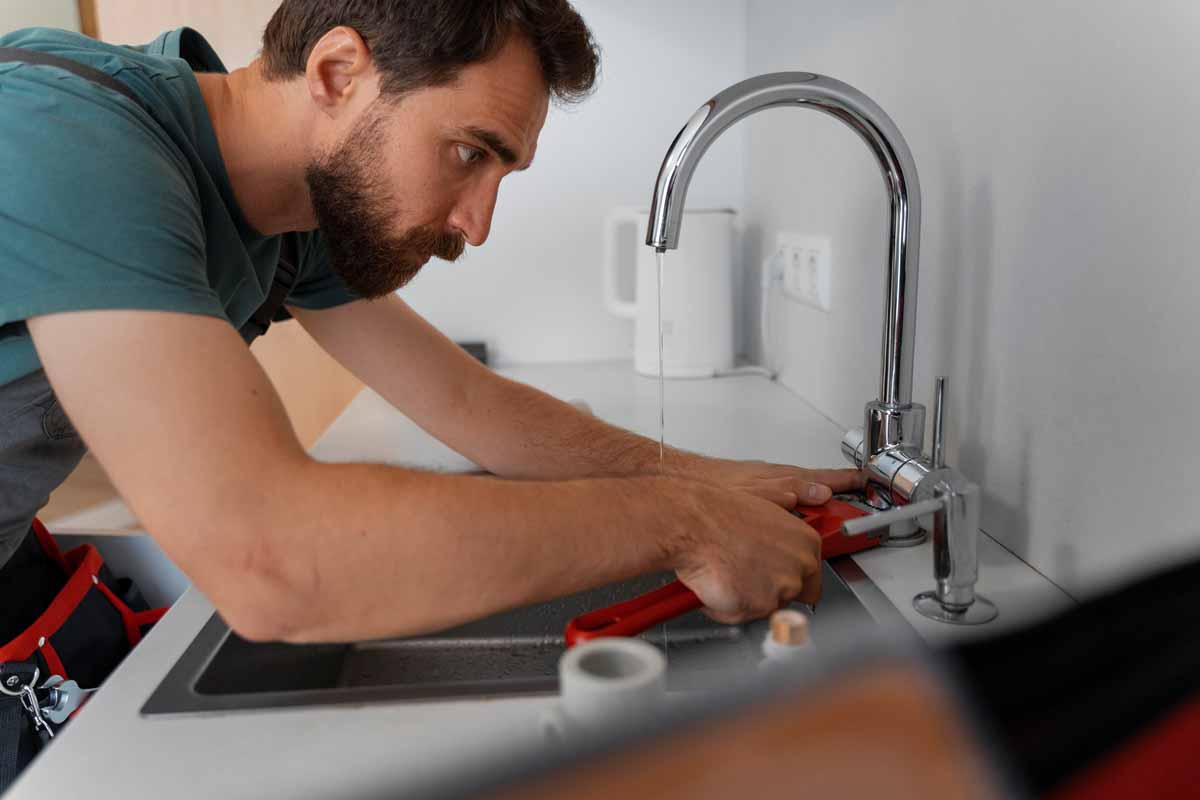
If you run a plumbing business, you already know that when someone’s basement floods at 2 AM or their water heater gives out on a Sunday morning, they’re not flipping through the Yellow Pages. They’re pulling out their phone and typing “emergency plumber near me” into Google. And if your business doesn’t show up in those top three local results, the coveted “Local Pack”, you’re essentially invisible to the people who need you most.
The plumbing industry is intensely competitive in local search. Every service area has dozens of contractors fighting for the same high-intent searches, and the difference between ranking first and fifth can mean hundreds of thousands of dollars in annual revenue. That’s where specialized SEO services come> Unlike generic marketing agencies that treat every industry the same, effective plumbing SEO requires deep understanding of local search dynamics, emergency service behavior, and the specific ranking factors that Google prioritizes for home service businesses.
At Divramis, our plumbing SEO company team has spent over a decade helping roofing companies, contractors, and local home-service businesses climb Google’s rankings with white-hat strategies, transparent reporting, and measurable lead growth.
We’ve spent years helping service businesses, from plumbers and roofers to specialized trades, climb to the first page of Google and stay there. At Divramis, we’ve seen clients increase their organic traffic by up to 1200% using white-hat, risk-free strategies tailored specifically to their industry and competitive landscape. For plumbing companies, this translates directly into more phone calls, more booked jobs, and more recurring customers.
In this guide, we’ll walk you through exactly how SEO services work for plumbing businesses, what components actually move the needle, and how to measure whether your investment is paying off. Whether you’re getting five calls a day or fifty, there’s almost certainly untapped potential in your local market, and a strategic SEO approach is how you capture it.
Why Plumbing Businesses Need Specialized SEO Services
Generic SEO might work for e-commerce stores or SaaS companies, but plumbing businesses operate in a fundamentally different environment. You’re not trying to rank nationally for broad terms, you need to dominate hyper-local searches in your service area, often within minutes of someone experiencing an urgent problem. This requires a specialized approach that accounts for how people search for plumbers, what Google prioritizes for local service queries, and how to convert that visibility into actual phone calls.
The buying journey for plumbing services is also unique. Unlike someone researching a new laptop over several weeks, a homeowner with a burst pipe or clogged drain needs help now. They’ll call the first few businesses that appear trustworthy and available. If your website loads slowly, doesn’t display a phone number prominently, or fails to convey immediate availability, you’ve lost the lead, even if you rank well. Specialized plumbing SEO addresses these conversion factors alongside traditional ranking optimization.
Another reason specialization matters: the competitive landscape. In most cities, you’re not just competing against other independent plumbers, you’re up against franchises with substantial marketing budgets, lead generation platforms like HomeAdvisor or Angi, and even big-box retailers offering installation services. A cookie-cutter SEO strategy won’t cut through that noise. You need tactics proven to work specifically in the trades and home services space.
The Local Search Landscape for Plumbers
When someone searches for plumbing services, Google’s algorithm prioritizes proximity, relevance, and prominence. That means three things: how close you are to the searcher, how well your content matches their query, and how well-known your business appears to be (based on reviews, citations, links, and online mentions).
The Local Pack, those three businesses that appear with map pins at the top of search results, captures the lion’s share of clicks for local service queries. Studies consistently show that the top three local results receive more than 60% of all clicks, while businesses ranking fourth or lower see dramatically less traffic. For plumbers, appearing in the Local Pack for searches like “plumber near me,” “emergency plumber [city],” or “water heater repair [neighborhood]” is make-or-break.
But here’s what many plumbing business owners don’t realize: the Local Pack results are different from the organic results below them. Google pulls Local Pack listings primarily from Google Business Profiles (formerly Google My Business), weighing factors like review quantity and quality, category selection, posting frequency, and how completely you’ve filled out your profile. Meanwhile, the organic results beneath the map prioritize traditional SEO factors like on-page optimization, backlinks, and site authority.
To truly dominate local search, you need to optimize for both. We’ve seen plumbing companies rank #1 organically but not appear in the Local Pack, or vice versa, because they only focused on one aspect of local SEO. A comprehensive approach ensures you capture visibility across all high-intent search result types.
There’s also the matter of service-area targeting. Unlike a restaurant that operates from a fixed location, plumbers typically serve customers across multiple cities or neighborhoods. Google has gotten smarter about detecting and rewarding businesses that clearly define their service areas without resorting to spammy tactics like creating fake locations. Properly structured location pages and service-area business settings are crucial for expanding your geographic reach.
How SEO Generates High-Intent Leads and Emergency Calls
Not all traffic is created equal, and for plumbers, the quality of leads matters far more than sheer visitor volume. SEO’s greatest strength for plumbing businesses is its ability to attract people with high purchase intent, folks who are actively searching for a specific service right now, not browsing casually.
Consider the difference between someone searching “how to fix a leaky faucet” versus “emergency plumber open now.” The first search indicates someone exploring DIY options: the second signals someone ready to hire immediately. Effective plumbing SEO targets the latter, high-intent, transactional searches that convert into phone calls and booked jobs. By optimizing service pages for terms like “sewer line repair,” “tankless water heater installation,” or “24-hour emergency plumber,” you’re positioning your business exactly where ready-to-buy customers are looking.
Emergency calls represent some of the highest-value opportunities in the plumbing industry, often involving larger jobs and less price sensitivity (because the customer needs the problem solved now, not three days from now when they’ve collected five estimates). Ranking well for emergency-related searches, and ensuring your site clearly communicates 24/7 availability, fast response times, and immediate booking options, turns SEO traffic into revenue exceptionally well.
There’s also a compounding effect to consider. When you consistently appear at the top of search results, you build brand recognition in your local market. Even customers who don’t click your listing the first time will start recognizing your business name. Over time, people begin searching for your company by name, which sends strong positive signals to Google and further strengthens your rankings. We’ve watched this flywheel effect dramatically increase our clients’ market share over 12-18 month periods.
Read more: International organic search tactics that scale across borders
Finally, SEO leads tend to have better lifetime value than leads from paid directories or pay-per-click advertising. When customers find you through organic search, they perceive you as more trustworthy and established than a business they encountered through an ad. They’re more likely to leave reviews, refer friends, and call you again for future plumbing needs. That long-term customer relationship value makes SEO one of the highest-ROI marketing channels for plumbing companies.
Core Components of Effective Plumbing SEO
A comprehensive SEO strategy for plumbing companies isn’t a single tactic, it’s a coordinated system of optimizations that work together to improve your visibility, credibility, and conversion rate. Let’s break down the essential components that actually move the needle.
Local SEO and Google Business Profile Optimization
Your Google Business Profile (GBP) is arguably the most important asset for local plumbing SEO. It’s the foundation of your Local Pack rankings and often serves as a potential customer’s first impression of your business. Yet we regularly encounter plumbing companies with incomplete profiles, outdated information, or zero engagement with the features Google offers.
Start with the basics: ensure your business name, address, and phone number (NAP) are accurate and consistent across your GBP, website, and everywhere else you’re listed online. Inconsistencies confuse Google and can hurt your rankings. Select the most specific primary category, “Plumber” rather than “Contractor”, and add relevant secondary categories like “Emergency plumber service,” “Drain cleaning service,” or “Water heater installation service.”
The service area settings deserve special attention. If you operate from an office that customers don’t visit, you should hide your address and instead define your service areas by city or zip code. Be precise and honest here, adding service areas you don’t actually cover might seem tempting, but Google has gotten remarkably good at detecting it, and the penalty can be severe.
Reviews are the lifeblood of local SEO for service businesses. Google heavily weighs review quantity, recency, and rating when determining Local Pack rankings. We recommend implementing a systematic review generation process: send follow-up texts or emails after each completed job, make it easy by providing direct links to your GBP review page, and train your team to ask satisfied customers for feedback. Responding to reviews, both positive and negative, also signals active engagement to Google and potential customers.
Regularly posting updates, photos, and offers through your GBP keeps your profile active and engaging. Posts appear directly in your knowledge panel and can highlight seasonal promotions, showcase completed projects, or reinforce your emergency availability. While posts don’t dramatically impact rankings on their own, they contribute to overall profile strength and can influence click-through decisions.
The Q&A section is an underutilized opportunity. Proactively seed your profile with common questions and helpful answers about your services, pricing structure, service area, and availability. This provides useful information to potential customers and gives you another place to naturally incorporate relevant keywords.
On-Page SEO for Service Pages and Location Targeting
While your Google Business Profile handles Local Pack visibility, your website’s on-page optimization drives organic search rankings. For plumbing companies, this means creating focused, well-optimized pages for each major service you offer and each significant location you serve.
Service pages should target specific, high-intent keywords. Rather than a generic “Services” page listing everything you do, create dedicated pages for “Drain Cleaning in [City],” “Emergency Water Heater Repair in [City],” “Sewer Line Replacement in [City],” and so on. Each page should include the service name and location in the H1 heading, URL, title tag, and meta description, while thoroughly explaining what the service involves, why customers might need it, what to expect, and why your company is the right choice.
The content on these pages needs to be genuinely useful, not just keyword-stuffed fluff. Explain the problems that lead customers to need this service, walk through your process, address common questions and concerns, and include clear calls-to-action with your phone number prominently displayed. We’ve found that longer, more comprehensive service pages (800-1200 words) tend to outrank thin, basic pages, especially in competitive markets.
Location targeting requires a thoughtful approach. If you serve multiple cities or regions, create location-specific landing pages for your most important markets. These shouldn’t be duplicate pages with just the city name swapped out, Google penalizes that. Instead, include genuinely local information: neighborhoods you frequently work> local plumbing code requirements, city-specific permits you handle, testimonials from customers in that area, and photos of jobs you’ve completed there.
Read more: Why you need a trusted SEO agency in your region
Title tags and meta descriptions might seem like minor details, but they directly impact click-through rates from search results. Your title should include your target keyword and location while being compelling enough to earn clicks. Instead of “Plumbing Services – ABC Plumbing,” try “24/7 Emergency Plumber in [City] | Same-Day Service | ABC Plumbing.” The meta description should expand on your value proposition and include a call-to-action.
Don’t neglect the technical on-page elements like header tags (H1, H2, H3), image alt text, and internal linking. Headers provide structure that helps both users and search engines understand your content hierarchy. Alt text on photos of your work or team should be descriptive and, where natural, include relevant keywords. Internal links between related service pages and blog content help Google understand your site structure and spread authority throughout your site.
Technical SEO: Site Speed, Mobile Optimization, and Schema Markup
Technical SEO is where many plumbing company websites falter. You might have great content and a solid GBP, but if your site loads slowly, breaks on mobile devices, or has structural issues, you’re sabotaging your own rankings and conversion rates.
Site speed has been a direct ranking factor for years, and Google’s Core Web Vitals update made it even more critical. When someone’s dealing with a plumbing emergency, they won’t wait six seconds for your site to load, they’ll hit the back button and call your competitor. We regularly see 40-50% bounce rate reductions when we optimize page load times for plumbing clients. Common issues include oversized images, excessive plugins, poor hosting, and unoptimized code.
Mobile optimization is non-negotiable. More than 60% of local searches happen on mobile devices, and Google uses mobile-first indexing, meaning it primarily looks at your mobile site when determining rankings. Your mobile experience needs to be exceptional: tap-to-call buttons prominently displayed, forms that are easy to fill out on small screens, readable text without zooming, and fast load times even on slower connections. If someone has to pinch and zoom or struggle to find your phone number, you’ve lost them.
Schema markup (structured data) helps search engines understand what your content means, not just what it says. For plumbing companies, implementing LocalBusiness schema can enhance how your business information appears in search results. Service schema helps Google understand what services you offer. Review schema can display star ratings directly in search results. FAQ schema can make your pages eligible for FAQ rich results. While schema doesn’t directly boost rankings, it can significantly improve click-through rates and helps Google better understand and categorize your business.
Other technical considerations include SSL certificates (the “https” vs “http”, Google gives preference to secure sites), clean URL structures (“yoursite.com/drain-cleaning” is better than “yoursite.com/page?id=472”), proper use of canonical tags to avoid duplicate content issues, and an XML sitemap that helps Google discover and crawl all your important pages. These technical foundations might not be glamorous, but they’re essential for competitive rankings.
Content Strategy That Converts Searchers Into Customers
Content isn’t just about ranking, it’s about positioning your plumbing business as the obvious choice when someone’s ready to make a hiring decision. The right content strategy attracts high-intent searchers, builds trust with potential customers, and supports your overall SEO efforts by targeting a wider range of valuable keywords.
Service-Specific Content and Emergency Repair Pages
Your most important content pieces are the pages targeting commercial-intent searches, people looking to hire a plumber right now. These service-specific and emergency pages are conversion-focused first and SEO-optimized second (though they need to be both).
For each major service you offer, you need a dedicated page that thoroughly addresses the customer’s needs. Let’s take “water heater repair” as an example. A high-converting page would cover signs your water heater needs repair, common problems and their causes, what to expect during a service call, typical repair costs versus replacement, and why your company is qualified to handle the work. It should include trust signals like certifications, years in business, warranties offered, and customer testimonials specific to that service.
Emergency pages deserve special attention because they target your most valuable searches. Someone searching “emergency plumber” at 11 PM on a Saturday is in crisis mode, they need immediate help and they need to know you’re available right now. These pages should emphasize 24/7 availability, fast response times (“we arrive within 90 minutes” is more compelling than “quick service”), no extra charges for nights or weekends, and showcase the types of emergencies you handle: burst pipes, overflowing toilets, sewer backups, gas leaks, and so on.
The layout and design of these pages matters enormously. Put your phone number at the top, make it large, and make it clickable on mobile. Consider adding a click-to-call button that sticks to the top of the screen as users scroll. Include multiple conversion points throughout the page, not just one contact form at the bottom. Some visitors will want to call immediately: others prefer to read more first: accommodate both behaviors.
Real photos of your team, trucks, and completed work dramatically increase trust and conversion rates compared to stock photos. When possible, include video testimonials or before-and-after photos of actual jobs. These authentic elements differentiate you from competitors using generic templates and imagery.
Read more: The real deal behind forum posting for SEO and referrals
Don’t forget to optimize these pages for local search by including your service area, city name, and nearby neighborhoods naturally throughout the content. “Water heater repair in [City]” should appear in the H1, URL, and throughout the body, but always in a way that reads naturally, never forced or awkward.
Educational Blog Content That Builds Trust and Authority
While service pages target bottom-of-funnel searchers ready to hire, blog content captures top- and middle-of-funnel traffic: people researching problems, comparing options, or trying to understand whether they need professional help. This content might not convert immediately, but it builds brand awareness, establishes expertise, and creates opportunities for future conversion.
The best plumbing blog content answers questions your potential customers are actively searching for. Think “how to tell if your sewer line is damaged,” “tankless vs traditional water heaters: which is better?”, “what to do when your toilet keeps running,” or “5 signs you need emergency plumbing service.” These informational searches have substantial search volume, and ranking for them puts your business in front of potential customers early in their journey.
When creating educational content, be genuinely helpful, even if that means explaining how to solve minor problems without hiring you. This might seem counterintuitive, but there are a few reasons it works: First, you build trust by demonstrating expertise without immediately asking for money. Second, many people will try the DIY solution, realize it’s more complicated than expected, and call you. Third, when they do need professional help in the future, they’ll remember the helpful company whose article they read. And fourth, Google rewards comprehensive, helpful content with better rankings.
Seasonal content also performs well for plumbing companies. Articles about winterizing pipes, preparing plumbing for summer vacations, or common plumbing problems in spring can be published and refreshed annually, capturing timely search traffic. These pieces can naturally transition from educational content to service promotion: “If you discover frozen pipes even though these precautions, call us immediately for emergency repair.”
Blog content also creates internal linking opportunities. When you publish an article about water heater warning signs, you can link to your water heater repair service page with relevant anchor text. This passes authority to your important service pages and helps Google understand your site structure and topic relationships.
The key is consistency and quality over quantity. One well-researched, genuinely useful 1,500-word article per month is far more valuable than four rushed, thin 400-word posts. Focus on topics with actual search demand (use keyword research to validate this), create content that thoroughly answers the question, and optimize it with proper headers, meta tags, and internal links.
Link Building and Citation Management for Plumbers
Backlinks, other websites linking to yours, remain one of Google’s most important ranking factors. They signal that other sites consider your content valuable and trustworthy, which transfers authority and credibility to your domain. For local plumbing businesses, the right link building strategy focuses on quality and relevance rather than sheer quantity.
Local citations are the foundation. These are mentions of your business name, address, and phone number on other websites, particularly in online directories like Yelp, Angi, HomeAdvisor, BBB, Yellow Pages, and industry-specific directories. Consistent citations across the web reinforce to Google that your business is legitimate and help validate your location information. We typically help plumbing clients build or clean up citations across 50-80 of the most authoritative general and industry-specific directories.
Citation consistency is crucial, every listing needs to have your NAP information formatted identically. If your Google Business Profile says “123 Main St.” but another directory says “123 Main Street,” that inconsistency can dilute your local SEO efforts. We’ve seen businesses with multiple phone numbers, old addresses from previous locations, or name variations scattered across the web, all of which confuse Google and weaken local rankings.
Local link building goes beyond directories. Look for opportunities within your community: sponsor a youth sports team and get a link from their website: participate in local business associations or chambers of commerce: partner with complementary businesses like real estate agents, property managers, or home inspectors who might link to your site or refer clients. These locally relevant links are particularly valuable for local search rankings.
Content-driven link building works well for the educational content we discussed earlier. When you publish genuinely helpful, well-researched content about plumbing topics, you create linkable assets that other sites might naturally reference. A local news site writing about how to prepare homes for winter might link to your comprehensive winterization guide. A real estate blog might link to your article about plumbing inspections for home buyers. These earned links are the highest quality and most sustainable.
Vendor and manufacturer links can also be valuable. If you’re certified to install specific brands of water heaters, tankless systems, or other equipment, the manufacturers often maintain installer directories with links. Same for professional associations, licensing boards, and trade organizations. Make sure you’re listed everywhere relevant to your credentials and specializations.
Read more: What every local business needs to know about social media
Avoid the temptation of spammy link building tactics: buying links, participating in link farms, or using automated link building software. Google has gotten remarkably sophisticated at detecting these schemes, and the penalty can be severe, potentially removing your site from search results entirely. At Divramis, we exclusively use white-hat link building techniques that focus on earning links through quality content, genuine relationships, and legitimate business listings.
Review links deserve special mention. Many review platforms like Yelp, Google, Facebook, and industry-specific sites include a link to your website from your business profile. Beyond the direct SEO value, these platforms send qualified traffic, people researching plumbers and reading reviews are often close to making a hiring decision. Maintaining active, well-reviewed profiles on the most popular platforms in your market serves both link building and reputation management purposes.
The link building process is gradual and ongoing. Unlike on-page optimization that can be completed in weeks, building a strong backlink profile takes months or years. But the authority you accumulate is durable and compounds over time, making it harder for competitors to displace you from top rankings. We typically see link building efforts begin to significantly impact rankings after 3-6 months of consistent work, with effects accelerating as domain authority grows.
Measuring ROI: Key Metrics and Performance Indicators
SEO is an investment, and like any business investment, you need to measure whether it’s paying off. For plumbing companies, the ultimate measure is new business, more calls, more booked jobs, more revenue, but tracking the right metrics helps you understand what’s working and where there’s room for improvement.
Organic traffic is the most fundamental metric. Using Google Analytics, track how many visitors come to your site from organic search (non-paid Google results) each month. Look at overall trends, traffic should grow steadily over time, but also dig into which pages are attracting visitors. Are your service pages getting traffic? Are blog posts pulling in new visitors? Which locations or services are generating the most interest?
Keyword rankings tell you where you stand in the competitive landscape. Track your positions for your most important target keywords: “plumber [city],” “emergency plumber [city],” “drain cleaning [city],” and your specific service terms. Tools like SEMrush, Ahrefs, or even Google Search Console show ranking positions over time. Climbing from position 8 to position 3 for “water heater repair [city]” might translate to a 300% increase in traffic for that search term.
Local Pack rankings deserve separate tracking because they drive so much traffic for service businesses. Note your position in the map results for your core searches. Position 1 in the Local Pack receives dramatically more calls than position 2 or 3, and positions 4 and below are essentially invisible since they don’t appear in the initial map display.
Google Business Profile insights provide valuable data about how people find and interact with your GBP listing. You can see how many people viewed your profile, how they found it (direct search for your business name versus discovery through category searches), how many clicked your phone number, requested directions, or visited your website. These metrics directly indicate how effectively your GBP is generating leads.
Conversion tracking is where many plumbing businesses drop the ball. Traffic is meaningless if it doesn’t generate phone calls and booked jobs. Carry out call tracking to understand which sources drive phone leads, you can use dynamic number insertion to assign unique phone numbers to different traffic sources or campaigns. Track form submissions through Google Analytics goal tracking. If possible, work with your team to note the source of each new customer (“How did you hear about us?”) so you can directly attribute closed business to SEO efforts.
Cost per lead and cost per acquisition help you compare SEO to other marketing channels. Calculate your total monthly SEO investment (services, tools, time) and divide by the number of leads or customers generated. We consistently see SEO deliver lower cost-per-lead than pay-per-click advertising or lead generation services once it reaches maturity, often by a factor of 3-5x.
Revenue attribution is the holy grail but requires coordination between your analytics and business operations. If you can track which customers came through organic search and what their lifetime value is, you can calculate precise ROI. Many plumbing companies find that customers acquired through organic search have higher lifetime value than those from paid channels because they’re coming to you based on perceived expertise and trust rather than an ad.
Review growth metrics matter both for reputation and SEO. Track your total review count and average rating on Google, Yelp, and other major platforms. More positive reviews generally correlate with better rankings and higher conversion rates. If you carry out a review generation system as part of your SEO strategy, you should see steady growth month over month.
Read more: Generative Engine Optimization and the next wave of SEO
Competitive benchmarking provides context for your performance. How do your rankings, traffic, and review counts compare to your main local competitors? Tools like SEMrush allow you to compare your organic visibility against competitors in your market. If the gap is closing, your strategy is working: if they’re pulling ahead, adjustments may be needed.
The timeline for SEO results varies, but most plumbing companies start seeing meaningful movement within 3-4 months, significant results by 6-9 months, and transformational growth by 12-18 months. We set realistic expectations with clients: SEO isn’t a magic switch, it’s a compounding investment. Early months focus on foundations, fixing technical issues, optimizing existing content, building citations, while later months capture the momentum from improved authority and rankings. At Divramis, we’ve helped clients achieve traffic increases up to 1200% by maintaining consistent, strategic optimization over extended periods.
Conclusion
For plumbing companies operating in competitive local markets, specialized SEO services aren’t optional, they’re the difference between being the business that everyone calls and the one that struggles to fill the schedule. While your competitors rely on expensive pay-per-click ads or middleman lead generation services that take a cut of every job, a well-executed SEO strategy puts you directly in front of high-intent customers without paying per click or per lead.
The key is treating SEO as a system, not a one-time project. Your Google Business Profile needs ongoing optimization and review generation. Your website requires regular content updates and technical maintenance. Your citation and link profiles should grow consistently over time. Rankings are earned through sustained effort, but once established, they become increasingly difficult for competitors to displace.
We’ve seen the impact firsthand with dozens of plumbing and home service clients. The companies that commit to comprehensive, specialized SEO, and stick with it through the initial months while foundations are built, consistently outperform competitors and capture dominant market share in their service areas. They’re the first call when pipes burst at midnight, the trusted name that homeowners search for by name, and the business that stays booked year-round rather than scrambling during slow seasons.
If you’re ready to stop renting visibility through ads and instead own your position at the top of local search results, it’s time to invest in proven SEO strategies built specifically for plumbing businesses. At Divramis, we’ve developed white-hat optimization techniques that have increased client traffic by up to 1200% through risk-free, industry-specific approaches. The phone’s going to ring for someone when the next plumbing emergency hits your service area, it might as well be yours.
Key Takeaways
- SEO services for plumbing companies capture high-intent emergency searches, positioning your business in the Local Pack where over 60% of clicks occur for local service queries.
- Specialized SEO strategies tailored to the plumbing industry outperform generic marketing by addressing unique factors like local service dynamics, rapid response expectations, and multi-location service areas.
- Google Business Profile optimization combined with on-page service pages targeting location-specific keywords like ’emergency plumber [city]’ drives both Local Pack rankings and organic search visibility.
- Technical SEO fundamentals—site speed, mobile optimization, and schema markup—directly impact conversion rates, as emergency customers abandon slow-loading sites and competitor pages.
- Quality backlinks from local citations, community partnerships, and content-driven link building establish domain authority over 6–18 months, creating sustainable competitive advantages that lower cost-per-lead by 3–5x compared to paid advertising.
- Tracking organic traffic growth, keyword rankings, phone call conversions, and customer lifetime value ensures SEO ROI is measurable and justifies continued investment in specialized optimization.
Frequently Asked Questions About SEO Services for Plumbing Companies
How do SEO services help plumbing companies generate more leads?
SEO services help plumbing companies rank in the Local Pack and organic search results for high-intent keywords like ’emergency plumber near me.’ By optimizing your Google Business Profile, website content, and technical elements, you attract customers actively searching for plumbing services, resulting in more phone calls and booked jobs.
What is the Local Pack and why is it important for plumbers?
The Local Pack is the map section at the top of Google search results showing three local businesses. Studies show these top three results capture over 60% of clicks for local service searches. For plumbers, ranking in the Local Pack is critical for visibility when customers search for emergency or local plumbing services.
How long does it take to see results from SEO for a plumbing business?
Most plumbing companies start seeing meaningful traffic increases within 3–4 months, significant results by 6–9 months, and transformational growth by 12–18 months. SEO is a compounding investment, with early months focused on foundations like technical fixes and citations, and later months capturing momentum from improved authority.
What’s the difference between SEO and pay-per-click advertising for plumbers?
SEO generates organic, long-term visibility without paying per click or lead, while PPC requires ongoing ad spend for each click. SEO customers typically have higher lifetime value and perceive your business as more trustworthy. Although SEO takes longer initially, it becomes increasingly cost-effective and sustainable over time.
Why do plumbing companies need specialized SEO services instead of generic ones?
Plumbing businesses operate in hyper-local markets with unique buying urgency and competitive dynamics. Specialized plumbing SEO addresses location-specific targeting, emergency service visibility, conversion optimization for immediate phone calls, and competition from franchises and lead platforms—factors generic agencies often miss.
How important are Google reviews for plumbing SEO rankings?
Reviews are critical for local SEO. Google heavily weighs review quantity, recency, and rating for Local Pack rankings. We recommend a systematic review generation process: requesting feedback after each job, making it easy to leave reviews with direct links, and responding to all reviews to signal active engagement.
Read More
Discover more from Kryptohodlers Crypto Learning: